![[personal profile]](https://www.dreamwidth.org/img/silk/identity/user.png) liv
livA couple of weeks ago, the infamous Laurie Penny (as discussed recently et passim) wrote an article about the Manic Pixie Dream Girl trope, which really seems to have struck a chord with a lot of people. I've read quite a few articles where people talk about how they did or didn't relate to story archetypes, and unfortunately can't now find the one that most spoke to me. But I've been wanting to contribute my own response as well, because I've been figuring out some stuff recently about me and stories. I hope this will make some sort of sense for people not in my head, it's still a bit at the unformed thoughts stage.
Penny is completely right about media criticism. There ought to be a much higher proportion of stories with female protagonists and female secondary characters who have lives beyond supporting the emotional development of male protagonists. And yes to everything she says about how MPDGs are a negative, sexist archetype. But my experience of relating to stories is quite different to Penny's.
I think partly it's that for me, the joy of reading is precisely not to find characters I can "relate to", it's to imaginatively cast myself as characters completely unlike me. People like me in circumstances very different from my own are also ok, but what I really like is immersing myself in the experience of being someone else. I like this in table-top roleplaying too, and to a great extent in real life. I really like when people tell me how it feels to be them, how they perceive and interact with an experience the world. I don't of course imagine I can truly understand how it is to be some other person, but getting glimpses of insight is one of my greatest joys.
The other question talking about identifying with characters, is, who counts as "people like me"? People who share my age, ethnicity, gender presentation, cultural background etc don't really seem "like me" if they don't share my personality. I mean, I completely sympathize with readers who complain that people like them along those axes are painfully absent from the media they're interested in, people who desperately cling on to some horrible stereotyped awful portrayal because it's the only example they have at all of someone "like them" in fiction. I mean, being able-bodied and cis and white and English I did much better for fictional characters in some senses like me than many people, and maybe that's why I never really cared very much that it was rare for able-bodied, cis, white English protagonists to be Jewish, bisexual, fat and female as well, certainly not all of those at the same time! But in any case I felt, and feel, much more connected to characters who are intellectual and sciencey, who are teachers and mentors, who are loyal to friends and scared of physical risk than to people who belong in the same identity categories as me.
It's also true that the characters I feel most comfortably connected to are often not shiny awesome super-special protagonists, but side-kicks. Especially people who are pragmatic and sensible and get things done behind the scenes so that Shiny Awesome McSpecial can fulfil their destiny successfully. I think those sorts of characters are about equally often female as male, in story archetypes. I mean, sometimes feminist critics don't like the female versions of those because they are stereotypical mothers, and precisely because their role in the story is to support the protagonist, not to develop as characters and have adventures in their own right. Which is a similar problem to the MPDG issue so expertly skewered by Penny. And I entirely agree that this archetype should absolutely not be the only one available to female readers.
Except that deep down, it's the life I want for myself, it's the path that makes me most happy. I want to facilitate and support other people who achieve great things. I want to be part of a story, stories are incredibly important to me, but I don't especially want to be the hero, and I don't want to be the writer either. Unlike Penny, I'm not
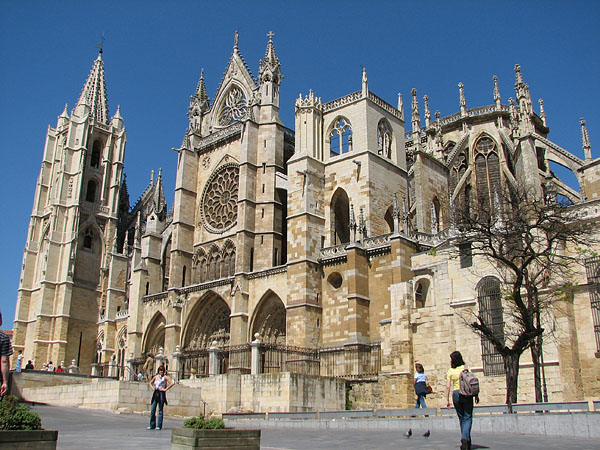
I'm not particularly creative, it has to be said. Probably this blog is the most "creative" thing I do, and what good there is something I think of as strictly craft, rather than art. I've held a somewhat romantic, talismanic image in my mind since I was a young teenager of being a stone-mason working on a small part of the decoration for a beautiful cathedral. (It's a specific cathedral, in this image, for reasons from my personal history.) I don't aspire to be the architect, or to any other kind of artistic achievement that, at least in stories, is accomplished by a lone genius. I'm not going to Cure Cancer, I'm going to find out a small amount of novel information about how cancer works and other people are going to use that knowledge to develop better drugs and other people yet are going to go out there and save lives by administering the drugs based ultimately on my research and that of hundreds, maybe thousands of my colleagues. I'm going to be (I hope) a small cog in a vast, breathtaking, magnificent machine, not a Great Man.
I don't think this is about being unthreateningly attractive to men. As a teenager I kind of wanted to grow up a blue-stocking, someone who cared more about intellectual pursuits than romance. I've never been interested in altering myself to appeal to men-in-general, men in the abstract. To be fair, I was never going to be either a buxom blonde sexy trophy or a manic pixie; in stories, men don't romantically pursue sensible, practical women who work to smooth their path. It turns out that pursuing my own dreams and being who I want to be (and not particularly good-looking or feminine, with that) is attractive to a small proportion of people, to my eternal gratitude, some of them female, and honestly that's a bonus I never expected to get. It's hard to threaten me by suggesting that if I don't perform femininity properly, I'll never "get a man," because I just care so much more about having friends, and anyway I've clearly proved the people wrong who thought my choices would make me perpetually unattractive and unloved.
But this idea of myself, this particular sense of me that I've constructed out of many many stories of sidekicks and loyal companions, isn't irrelevant to my relationships either. One of the archetypes of someone who facilitates and supports and gives of herself to allow someone else to achieve greatness (in a particular, individualistic and perhaps even patriarchal sense of the word) is motherhood. But I'm not a mother, I never have been and I never want to be, and I think a big part of the reason is that I want to be the sidekick of people I admire, not tiny helpless children who are all potential and haven't yet shown what they're capable of. Simone de Beauvoir's autobiography was a huge influence on me as a teenager, and one thing I particularly connected to was her talking about her need to be in a relationship with someone she could look up to, intellectually and in other ways. She didn't have many people around her with more brains than her, basically it was down to Sartre or "l'autre Simone" [Weil]. De Beauvoir talks about how her relationship with Sartre moved from hero-worship to a kind of blending of identities, and through that to a more mature, profound relationship that lasted for several decades. And yes, I am ridiculously drawn to people more intelligent than myself (and like de Beauvoir, arrogant enough to find such people relatively rare), and I want to relate to such shiny sparkly people in ways that are to do with, it's a scary word, but service.
I have a friend who has achieved some amazing, historic things, and one of the things I'm most proud of in my life is that I've been a friend to her, and that I helped to set her on the track which lead to her amazing achievements. Not the sort of person who goes down in history, (though my pioneering friend has promised to mention me in her eventual autobiography). Just that having played that small, supporting role gives me a real sense of being in a story, like my life has been meaningful. It's not that I wouldn't love to achieve great things myself, of course, but just statistically if nothing else it's likely that I won't. But that doesn't mean I'm a non-entity, it means I'm a supporting character, and that pleases me.
Penny is completely right about media criticism. There ought to be a much higher proportion of stories with female protagonists and female secondary characters who have lives beyond supporting the emotional development of male protagonists. And yes to everything she says about how MPDGs are a negative, sexist archetype. But my experience of relating to stories is quite different to Penny's.
I think partly it's that for me, the joy of reading is precisely not to find characters I can "relate to", it's to imaginatively cast myself as characters completely unlike me. People like me in circumstances very different from my own are also ok, but what I really like is immersing myself in the experience of being someone else. I like this in table-top roleplaying too, and to a great extent in real life. I really like when people tell me how it feels to be them, how they perceive and interact with an experience the world. I don't of course imagine I can truly understand how it is to be some other person, but getting glimpses of insight is one of my greatest joys.
The other question talking about identifying with characters, is, who counts as "people like me"? People who share my age, ethnicity, gender presentation, cultural background etc don't really seem "like me" if they don't share my personality. I mean, I completely sympathize with readers who complain that people like them along those axes are painfully absent from the media they're interested in, people who desperately cling on to some horrible stereotyped awful portrayal because it's the only example they have at all of someone "like them" in fiction. I mean, being able-bodied and cis and white and English I did much better for fictional characters in some senses like me than many people, and maybe that's why I never really cared very much that it was rare for able-bodied, cis, white English protagonists to be Jewish, bisexual, fat and female as well, certainly not all of those at the same time! But in any case I felt, and feel, much more connected to characters who are intellectual and sciencey, who are teachers and mentors, who are loyal to friends and scared of physical risk than to people who belong in the same identity categories as me.
It's also true that the characters I feel most comfortably connected to are often not shiny awesome super-special protagonists, but side-kicks. Especially people who are pragmatic and sensible and get things done behind the scenes so that Shiny Awesome McSpecial can fulfil their destiny successfully. I think those sorts of characters are about equally often female as male, in story archetypes. I mean, sometimes feminist critics don't like the female versions of those because they are stereotypical mothers, and precisely because their role in the story is to support the protagonist, not to develop as characters and have adventures in their own right. Which is a similar problem to the MPDG issue so expertly skewered by Penny. And I entirely agree that this archetype should absolutely not be the only one available to female readers.
Except that deep down, it's the life I want for myself, it's the path that makes me most happy. I want to facilitate and support other people who achieve great things. I want to be part of a story, stories are incredibly important to me, but I don't especially want to be the hero, and I don't want to be the writer either. Unlike Penny, I'm not
rebelling against the idea of being a character in somebody else’s story [because] I wanted to write my own. Unlike Penny, I don't
refuse to burn my energy adding extra magic and sparkle to other people’s lives; that is exactly what I do want to do with my life. Maybe I only think this because I'm a girl, because I was "socialized" by Teh Patriarchy to be a sidekick and a supporter rather than a hero. I don't know, I can only speak from my own experience. It may be a rationalization, but it seems to me that the world needs people who aren't particularly "special" just as much as it needs heroes and trailblazers, and I would like to be one of those people. Someone who collaborates and works with others to keep on fighting entropy, and sustaining the achievements of the heroes so that they become lasting improvements.
I'm not particularly creative, it has to be said. Probably this blog is the most "creative" thing I do, and what good there is something I think of as strictly craft, rather than art. I've held a somewhat romantic, talismanic image in my mind since I was a young teenager of being a stone-mason working on a small part of the decoration for a beautiful cathedral. (It's a specific cathedral, in this image, for reasons from my personal history.) I don't aspire to be the architect, or to any other kind of artistic achievement that, at least in stories, is accomplished by a lone genius. I'm not going to Cure Cancer, I'm going to find out a small amount of novel information about how cancer works and other people are going to use that knowledge to develop better drugs and other people yet are going to go out there and save lives by administering the drugs based ultimately on my research and that of hundreds, maybe thousands of my colleagues. I'm going to be (I hope) a small cog in a vast, breathtaking, magnificent machine, not a Great Man.
I don't think this is about being unthreateningly attractive to men. As a teenager I kind of wanted to grow up a blue-stocking, someone who cared more about intellectual pursuits than romance. I've never been interested in altering myself to appeal to men-in-general, men in the abstract. To be fair, I was never going to be either a buxom blonde sexy trophy or a manic pixie; in stories, men don't romantically pursue sensible, practical women who work to smooth their path. It turns out that pursuing my own dreams and being who I want to be (and not particularly good-looking or feminine, with that) is attractive to a small proportion of people, to my eternal gratitude, some of them female, and honestly that's a bonus I never expected to get. It's hard to threaten me by suggesting that if I don't perform femininity properly, I'll never "get a man," because I just care so much more about having friends, and anyway I've clearly proved the people wrong who thought my choices would make me perpetually unattractive and unloved.
But this idea of myself, this particular sense of me that I've constructed out of many many stories of sidekicks and loyal companions, isn't irrelevant to my relationships either. One of the archetypes of someone who facilitates and supports and gives of herself to allow someone else to achieve greatness (in a particular, individualistic and perhaps even patriarchal sense of the word) is motherhood. But I'm not a mother, I never have been and I never want to be, and I think a big part of the reason is that I want to be the sidekick of people I admire, not tiny helpless children who are all potential and haven't yet shown what they're capable of. Simone de Beauvoir's autobiography was a huge influence on me as a teenager, and one thing I particularly connected to was her talking about her need to be in a relationship with someone she could look up to, intellectually and in other ways. She didn't have many people around her with more brains than her, basically it was down to Sartre or "l'autre Simone" [Weil]. De Beauvoir talks about how her relationship with Sartre moved from hero-worship to a kind of blending of identities, and through that to a more mature, profound relationship that lasted for several decades. And yes, I am ridiculously drawn to people more intelligent than myself (and like de Beauvoir, arrogant enough to find such people relatively rare), and I want to relate to such shiny sparkly people in ways that are to do with, it's a scary word, but service.
I have a friend who has achieved some amazing, historic things, and one of the things I'm most proud of in my life is that I've been a friend to her, and that I helped to set her on the track which lead to her amazing achievements. Not the sort of person who goes down in history, (though my pioneering friend has promised to mention me in her eventual autobiography). Just that having played that small, supporting role gives me a real sense of being in a story, like my life has been meaningful. It's not that I wouldn't love to achieve great things myself, of course, but just statistically if nothing else it's likely that I won't. But that doesn't mean I'm a non-entity, it means I'm a supporting character, and that pleases me.

(no subject)
Date: 2013-07-11 02:22 pm (UTC)-J
(no subject)
Date: 2013-07-11 02:54 pm (UTC)(no subject)
Date: 2013-07-11 02:56 pm (UTC)-J
(no subject)
Date: 2013-07-11 06:35 pm (UTC)(no subject)
Date: 2013-07-11 09:45 pm (UTC)-J
(no subject)
Date: 2013-07-11 09:31 pm (UTC)The older I got, the more of a disconnect I felt between the kind of person I am and the kind of person I gravitate to when reading. The realisation that Alanna probably wouldn't even find me interesting as a friend was actually quite a blow.
I never felt a dearth of characters like me - for one thing, there's always Hermione, Lucy Pevensie (but she, too, was 'as good as a boy' and that's the phase I liked her best, the adult warrior Lucy) and so on. But immersing myself in the lives of an archetype ideal female character quite unlike me eventually had some odd effects on my self-image.
The other thing about the empathetic (rather than SYMpathetic) value of the reading experience is that diversity in that respect seems just as important to me. There's a quote kicking around Tumblr about the importance of novelistic empathy in relation to real world empathy: here. I think the author's theory about novels and human rights is a long bow, but there's something in it.
(no subject)
Date: 2013-07-12 03:47 pm (UTC)People who are like me: possibly Dinah Glass in The Demon Headmaster, at least in the sense that she's one of the very few novel portrayals of brainy / bookish kids that seem in any way realistic to me. (Roald Dahl's Matilda and Orson Scott Card's Ender and a bunch of other kids where the plot depends on them being precocious seem utterly implausible to me.) Jane Graham in Lynne Reid Banks' The L-shaped Room is like me in subtle aspects of personality that are quite hard to describe in simple lists of adjectives, let alone identity characteristics. Indeed, most of Banks' protagonists react a whole lot more like me than pretty much anyone else I've come across in fiction, but I happened to read The L-shaped room at a young age so it made a strong impression on me.
In terms of gender, I probably related more to boys than to obviously feminine girls or so-called "tomboys" or girls in the Alanna archetype of dressing as a boy to have adventures. But that's quite possibly because there are more well-drawn boy protagonists in children's literature than girls. Oh, and Pippin in LotR, but I was convinced as a child that Merry and Pippin were girls, because I'd read so many children's fantasy books in the Narnia and E Nesbitt mould where two boys and two girls go on adventures, and clearly Frodo was the Chosen One and Sam was the Sidekick and Merry was the Sensible Motherly one and Pippin was the Impulsive younger sister who needs protecting. It took me years to notice that the hobbits are actually adults at the start of the story, and in fact all male.
I definitely agree that the connection between empathy with diverse characters and real commitment to human rights is a bit, um, optimistic, but that doesn't mean it's not important. And it's a counterpart to the argument that's usually advanced for diversity which is that kids from whatever minority group need role-models too.
(no subject)
Date: 2013-07-11 04:29 pm (UTC)You say you identify with the sidekick archetype, but what you describe doesn't seem to me to be the sidekick.
Hermione Granger is a sidekick. You're not describing her. You're describing Minerva McGonagall.
Okay, two things: I don't think your lack of identification with what you see as the hero archetype is sexist or a failing of any sort. I think the hero-as-you-see-him is a somewhat narcissistic role to identify with -- though not unhealthily so -- and it's not unreasonable to reject in favor of more cooperative roles.
(no subject)
Date: 2013-07-11 05:03 pm (UTC)I haven't read Harry Potter carefully or all the way through, but it sounds plausible to me that I am (or want to be) more like McGonagall than Hermione. (The other trouble with that example is that everybody identifies with Hermione because she's the only halfway solid character in the series, and only not the protagonist because it was a shrewd marketing decision to have The Boy Who rather than The Girl Who.) Is there a term for the generalization of the sort of role McGonagall represents?
Cooperative is certainly important to me, but I think not the whole of what I'm trying to say here? It's not just that I'm more interested in collective, community success than I am in personal glory, it's that I specifically want to contribute to other people achieving personal glory.
(no subject)
Date: 2013-07-11 05:06 pm (UTC)...! Woman, I am a surrealist crypto-Jungian psychotherapist. I am ALL about the archetypes.
Also, I am expected at a lunch date and have to run off. More later when I can.
(no subject)
Date: 2013-07-11 05:34 pm (UTC)(no subject)
Date: 2013-07-14 06:33 am (UTC)Is there a term for the generalization of the sort of role McGonagall represents?
*Points upward to the OP* teachers and mentors
Mentor was character in a story. A character so iconic his name came to mean, in English, one who cultivates another. See also.
Note there are two different sorts of archetype we are discussing: archetypes of interpersonal roles, such as "mentor" and "king" and "hero", and then there are archetypes of narrative roles, such as "side-kick" and "villain" and "hero". Note the overlapping senses of "hero"!
It's pretty clear that you're not into the interpersonal archetype sense of "hero" -- a glory-pursuing adventurer-rescuer, who is characterized by great daring, usually physical and typically by some sort of great physical acumen. But it's less clear to me how you relate to the narrative archetype sense of hero. If the story is about a mentor -- such stories have been written and filmed -- and it's about their trials and tribulations to cultivate their charges, is that your story? Are you comfortable with that? Or is it the centering of that narrative that you wish to divest yourself of?
The archetype of the mentor is a facet of the Magician aka the Sage. Consider Merlin, both wizard and mentor to Arthur. In stories, such benevolent experts at arcanities typically take the narrative archetype role of the Wise Old Man (or occasionally Wise Old Woman), whose job in the plot is to clue the Hero in to the nature of the Quest and help him get along it.
Note, aspiring Sages: if you stick around a hero narrative too long, you will get rubbed out. Merlin, Obi Wan, Gandalf (temporarily). The Three Wise Men boogied right on out of Bethlehem, knowing what was good for them. You're too smart, and the Hero needs to do something dumb to advance the plot. It can't happen if you're around; circumstances will conspire to whack you if you're still being useful too late in the story. Dumbledore, a friend pointed out, never stood a chance.
Cooperative is certainly important to me, but I think not the whole of what I'm trying to say here? It's not just that I'm more interested in collective, community success than I am in personal glory, it's that I specifically want to contribute to other people achieving personal glory.
As you mention in the OP, when women nurture, it's lumped in under "mothering", often dismissively and reductively so. This is definitely nurturing, but the sort of nurturing that is seen as a masculine sort of cultivation of excellence.
There are three interesting feminine examples of the archetype of the mentor-Magician: Ariadne (who is atypical in showing up so late in the story, which is probably why she isn't killed), Baba Yaga (with whom I'm not well familiar), and fairy godmothers. But mostly the Magician is male.
I've always gravitated very hard to the Magician archetype, even from earliest childhood. It seemed very clear that Gandalf was the nicest of all characters to be in tLotR. After all, he was the one who was always in the know, was the most bad-ass in combat, had magic, had the best horse, throws the best parties, is besties with the eagles, the elves, Beorn, and Tom Bombadil among others, could come and go when he wanted, had an awesome library, and his idea of a social commitment was "expect me when you see me." Really, what more could a girl want?
So it's been very interesting to me how there's been an observable shift in the role of the Magician in stories in our culture. When I was a girl, mostly Magicians (the interpersonal archetype) appeared as Supernatural Aid (as Campbell has it) (the narrative archetype) to the Hero (the narrative archetype). The fact that they had their own stories was heavily hinted at or even briefly shown; it was clear that however important showing up in the hero's story was to them, it was not the only thing they were about. They had their own lives, and those lives were very interesting.
I suspect the initial pioneer was Sherlock Holmes, and the pebble that started the avalanche was Doctor Who: Doyle and the boffins at BBC decided it would be more fun to center the story of the Supernatural Aid -- the story of the Magician who comes in and figures things out, then rides out again -- and make the Hero's story orbit around it. In the last quarter of the 20th century, these sorts of Magician-centered stories became increasingly common, and eventually you start getting Magician-centered stories in which the Magician no longer functions as any sort of Supernatural Aid (narrative archetype) to someone else -- the Hero story is abandoned or subsumed. This hasn't been enormously successful, archetypically, but it sure made a lot of money.
ETA: Right, tl;dr: The Sage and it's facet the Mentor are traditionally male prerogatives, and it seems pretty obvious to me why any thinky woman might covet them, because for that they are way cool.
(no subject)
Date: 2013-07-11 07:16 pm (UTC)(no subject)
Date: 2013-07-11 07:48 pm (UTC)(no subject)
Date: 2013-07-11 11:56 pm (UTC)A post by a dear friend, Julia, about a traumatic and unexpected death; and one of the stories from
More later, maybe, but these are what my heart is saying right now. x
(no subject)
Date: 2013-07-12 03:48 pm (UTC)(no subject)
Date: 2013-07-12 02:05 pm (UTC)To some extent, the way I view my writing fiction is also in a support role; my purpose is to serve as conduit for the story to get out into the world and shaped as well as possible.
(no subject)
Date: 2013-07-12 03:57 pm (UTC)Academia, yeah, I think one of the things I'm chafing against is that the structure is still set up on a kind of Great Man / Lone Genius basis. That's not the way to do high-tech science for a start, and it means that only a very small percentage of people can actually be successful scientists, and besides all that it seems obvious that punishing people for cooperating and collaborating isn't going to help advance human knowledge. I'm in some ways in a better position than you to publish papers, since I'm a PI and I'm ok with the management and general people-stuff responsibilities that entails, and I don't hate academic writing with any emotion more passionate than 'bleh'. But I don't want to climb all over everybody else to get to the top, and it's hard to see how I can find a career shape that doesn't require that.
(no subject)
Date: 2013-07-15 12:05 pm (UTC)It's one of the things that I find somewhat confusing when scifi/fantasy fans talk about preferring scifi/fantasy to other genres because 'it gives you an insight into another world' - for me, all novels do that. Seeing the world through Harriet Vane's eyes is totally different to Frodo's is totally different to Charles Ryder's etc etc.
Tangentially but because it's discussed a bit in the comments, I do dislike the way that female bookish characters are usually like Hermione - hard workers, self-righteous, bossy - rather than naturally talented, detached, intellectual. Seems like a really stereotypical portrayal - girls work hard and memorise things and boys are often lazy but can be more naturally gifted.
(no subject)
Date: 2013-07-16 09:17 am (UTC)And I do think you're right about portrayals of intellectual girls, you rarely get a female nonchalant genius type. I suppose I always was a swotty, bossy hard-worker myself so I'm less bothered by Hermione fitting that trope. But it is definitely a trope, and may well be a sexist one.